
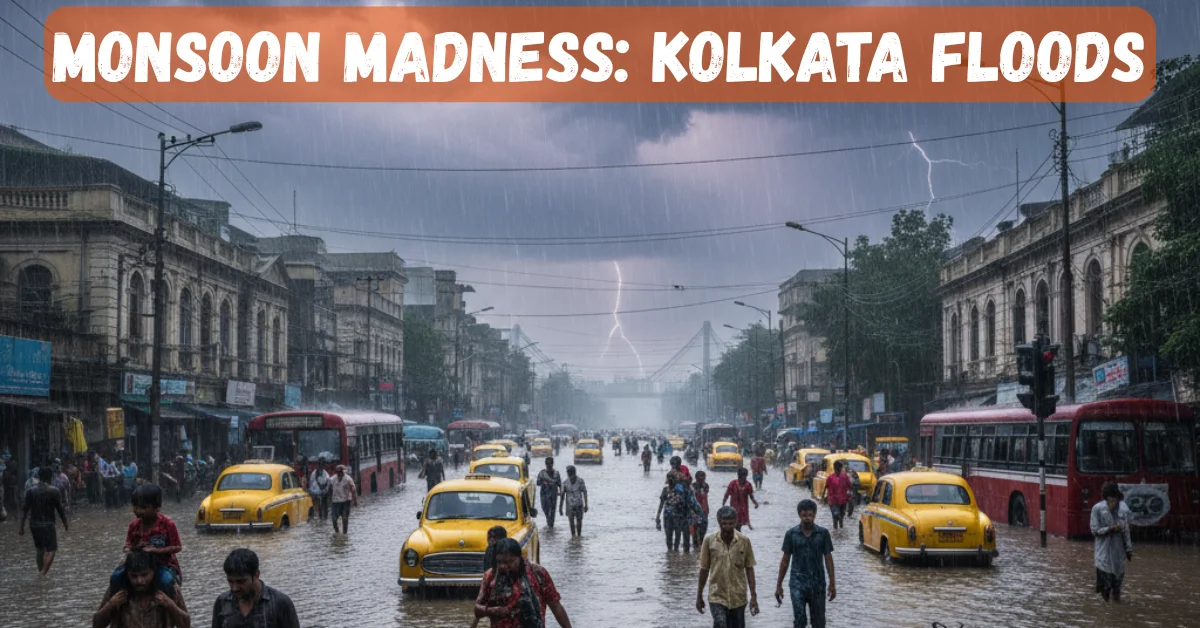
Monsoon Madness: Kolkata Floods, Schools Close, and Five People Die
Kolkata woke up on Wednesday to a nightmare that no one saw coming, even though the city is used to severe monsoons. The streets were hit with more than 250 millimeters of rain in only 24 hours, the most in decades. This turned busy areas into liquid chaos. Five individuals died in drowning and other mishaps, and the whole city stopped. The flooding showed how weak city planning is when it comes to dealing with bad weather. For example, cars were submerged in Park Street and homes were inundated in Salt Lake.
A Rainy Reckoning: The Cost to People and the Quick Response
The rain, which was caused by a low-pressure system that had stalled over the Bay of Bengal, started late Tuesday and didn’t stop until early Wednesday. Emergency personnel rushed to the scene as news came in of three deaths in north Kolkata from buildings that fell down and two more in the south from fast-moving currents that swept away pedestrians. Hospitals were full of people with cold and injuries from falling on icy roadways. The Kolkata Municipal Corporation and other local governments used more than 500 pumps to drain important regions, but many low-lying neighborhoods, like Behala, stayed waterlogged for hours. A top weather official remarked, “We’ve never seen water levels this high this early in the season,” and told people not to travel unless they had to.
The crisis impacted families the hardest at home. Parents were happy when the education administration said that schools and colleges would be closed on September 24 and 25. This meant that kids wouldn’t have to worry about getting to school in flooded conditions. This change, which is the first of its kind at such an early monsoon peak, shows how climate change is changing India’s rainy season. Last September, there was barely half as much rain.
Traffic and daily problems that cause gridlock on the ground
The famous yellow taxis and trams of Kolkata proved useless in the chaos. Major roads like EM Bypass and AJC Bose Road became rivers, leaving people stuck for hours. The Kolkata Metro, which millions of people rely on, stopped running on elevated sections because water got in and messed up the signals. Ride-hailing apps saw a 70% increase in cancellations, and drivers told stories of driving through potholes that had turned into ponds. A shopkeeper in Gariahat said it was like “paddling a boat through Howrah Bridge at rush hour.”
But even though there was a lot of traffic, the community spirit was strong. Neighborhood groups used inflated tires to make boat-like rescues, while volunteers brought hot meals to people from high-up community buildings. It’s a reminder that even though the city’s infrastructure isn’t up to date—experts say the drainage systems were constructed for softer rains—people’s strength keeps it going.
You can also read: TikTok Faces Fresh Ban Threats in US and Europe: What It Means for Millions of Users , Mahavatar Narsimha OTT release confirmed: Netflix to stream epic from 19 Sep
Looking Ahead: Advice for People Who Fight in the Rain
As cleanup starts, the weather is expected to become better by Friday, but aftershocks like waterborne infections are still a threat. Health officials said that over the next week, people should boil water and not eat food from the street. If you’re a parent looking forward to the school holiday, make it a learning experience by talking about emergency kits that include flashlights, non-perishable food, and waterproof paperwork. To make cities like Kolkata more resilient to climate change, urban planners are already asking for greener alternatives like more permeable pavements.
This flood isn’t just a weather phenomenon; it’s a wake-up call to adapt to climate change. As India’s monsoons get worse, stories like this encourage people to live in a way that is better for the environment. Kolkata, be safe; the sun will come out soon.